
🕒 4 min read
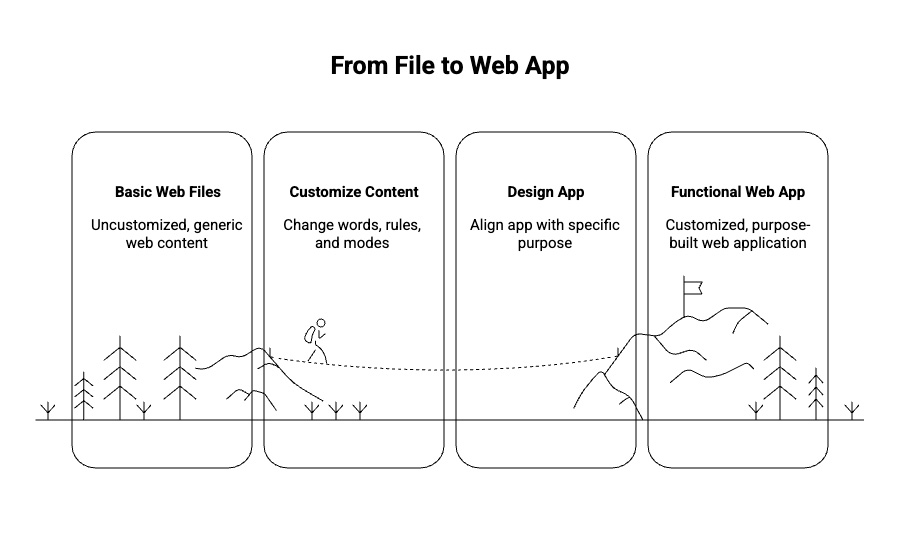
For decades, building a web application meant learning to code, hiring developers, or both. Today, AI-powered app builders are changing that reality by turning plain language into functional software. You can start with something as simple as a spreadsheet or a rough idea and end with a live web or mobile app. This shift is especially important for small businesses, educators, and creators who need tools quickly. Instead of months of development, many projects now take days or even hours. The result is a new path from basic files to real, usable applications.
At the center of this change is prompt-based generation. You describe the app you want in plain English, such as “an inventory tracker for my small business,” and the AI creates the initial structure for you. This usually includes screens, basic navigation, and starter logic. The AI is not guessing randomly; it is drawing from patterns learned across thousands of similar apps. Think of it as a junior developer who never gets tired and always starts with a solid draft. You can then refine what it generates instead of starting from scratch.
Once the foundation is in place, visual editors take over. Most AI app builders use drag-and-drop interfaces with pre-built components like forms, lists, buttons, and charts. You can move elements around the screen and instantly see how the app will look to users. This visual approach makes UI and UX design far less intimidating. You do not need to memorize code syntax or layout rules. Instead, you design by arranging blocks, much like building a slide deck or webpage.
AI assistants add another layer of support during the build process. These assistants can suggest better layouts, generate placeholder content, and help map data correctly. If something breaks, the AI can often explain why in simple language and suggest a fix. This lowers the frustration that usually comes with debugging. For non-coders, this guidance can be the difference between giving up and finishing the app. The experience feels more like collaboration than trial and error.
Template customization is where speed really shines. Many platforms start with industry-specific templates for things like directories, dashboards, booking systems, or client portals. The AI adjusts these templates based on your prompts and choices. This means you are not just picking a generic layout, but shaping something that fits your exact use case. Small businesses can launch tools that feel custom-built without custom costs. Time saved here often translates directly into faster results and lower risk.
Several platforms stand out depending on what you want to build. Glide is excellent for internal tools and mobile-friendly web apps built from Google Sheets or Airtable. Lindy focuses on full-stack generation, letting you describe an app and receive a working product with logic included. Bubble offers a powerful visual editor and AI features for more complex applications. Adalo is well-suited for mobile app MVPs that can be published to app stores. For beginners, Softr is often the easiest entry point.
Each platform has strengths and trade-offs, so the right choice depends on your goal. Some prioritize speed and simplicity, while others offer deeper control. The good news is that none require traditional programming knowledge to get started. You learn by doing and adjusting as you go. Over time, users often build confidence and attempt more advanced projects. This gradual learning curve is one of the biggest advantages of AI-driven tools.
The process usually follows a few simple steps. First, choose a platform based on whether you want a web app, mobile app, or internal tool. Next, define your app’s purpose using natural language prompts or by selecting a template. Then, customize the design and features using the visual editor. After that, connect your data, often through tools like Google Sheets or built-in databases. Finally, test the app and publish it to the web or app stores.
AI app builders are not about replacing developers; they are about expanding who gets to build. For teachers, entrepreneurs, and small teams, this is a powerful shift. Ideas no longer have to wait for technical resources to become real. With the right prompts and tools, a simple file or concept can evolve into a working application. That path from file to web app is no longer a dream. It is a practical option available right now.