
🕒 4 min read
My Journey as a Young Tech Guru in the Early Internet Era
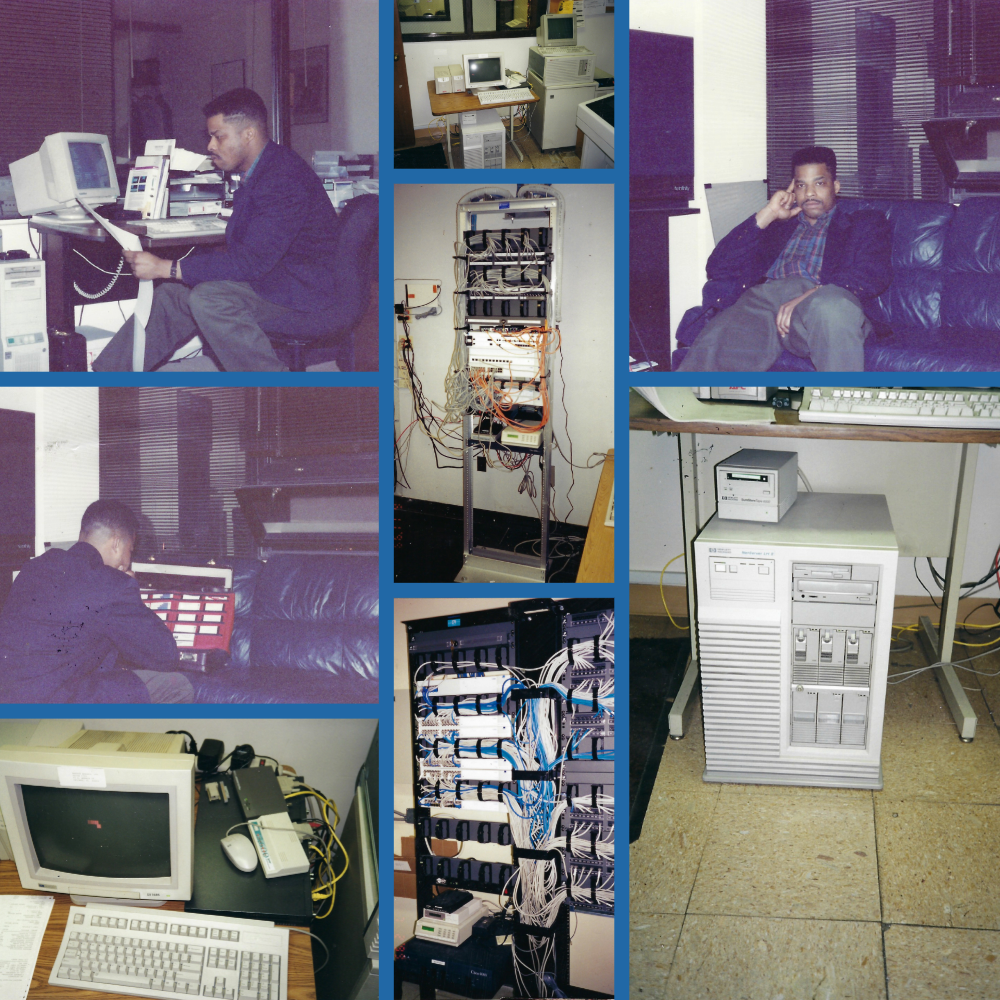
In 1992, being a geek was a completely different experience than it is in 2025. Back then, the World Wide Web had just been launched — but it wasn’t open to the public yet. If you were lucky (or nerdy enough), you might be running on an Intel 486 CPU with 1MB of RAM, a 30MB MFM hard drive, a 9600 baud Motorola modem, and a chunky 15-inch SVGA CRT monitor[1]. That was my setup — and yes, it felt like cutting-edge magic.
Living in the BBS World
Before the Web, there was the Bulletin Board System (BBS). To a teenager hungry for connection, it was a dream come true. Dial-up meant you could:
- Upload and download files
- Read breaking news (before CNN.com even existed)
- Trade messages on public boards
- Chat live with other early adopters
Commercial platforms like AOL and CompuServe were the gateways for many, though the real thrill was dialing into local BBS networks to avoid long-distance phone charges. I was already working with The Chicago Tribune Computing Group (later Tribune Media Group), and those experiences sharpened my skills early. To belong to that community meant you had to get your hands dirty solving real technical problems — no YouTube tutorials, no Stack Overflow, just grit and geek instinct.
My First Step Into the Internet
A few months later, I connected to the internet through the University of Minnesota. Suddenly, TCP/IP wasn’t just theory in a whitepaper — it was the key to a whole new digital universe.
Here’s the timeline of what blew my mind back then:
- Gopher protocol: Created at the University of Minnesota, it allowed document sharing across networks.
- Veronica: The first search engine for Gopher, soon followed by Jughead, which indexed one server at a time.
- Archie: A search engine for FTP files — imagine Google, but with training wheels.
- Mosaic browser (1993): Developed at the University of Illinois, it combined text and images into a single screen and basically birthed the modern web.
Seeing my first webpage in Mosaic felt like flipping on the lights in a dark room. It was simple text and hyperlinks, but it was the future.
Growing Up with the Web
As a young techie, I didn’t just watch these shifts — I lived them:
- I was among the first wave of users to explore HTML as a new language of communication.
- I saw email transition from a niche academic tool to the backbone of global communication.
- I followed the early browser wars between Netscape and Microsoft’s Internet Explorer.
- I learned firsthand how sharing code and knowledge freely (long before GitHub) fueled creativity and innovation.
Without this wave of tech, we’d still be hammering away at typewriters. Instead, we were pioneering what would become today’s interconnected digital society.
The “Young Tech Guru” Looking Back from 2025
Fast-forward to today, and I smile at how fearless we were back then. Teenagers and twenty-somethings, experimenting with BBS nodes, wiring modems, and sneaking late-night dial-up sessions while the family phone line was busy.
Yes, I was that young tech guru — the one mixing curiosity with courage, figuring out the internet before it had training wheels. And in 2025, I see the same fearless spirit in today’s young creators tinkering with AI, AR/VR, quantum computing, and blockchain.
Because that’s the truth about technology: each era belongs to the ones brave enough to dive in headfirst.
✨ From BBS to WWW, from Mosaic to ChatGPT, I’m proud to say: I was there at the start — and I’m still here, still building, still curious.