

This article contains affiliate links. If you buy through them, MyrinNew.com may earn a commission at no extra cost to you.
🕒 4 min read
Before buying an AI automation tool, describe one completed piece of work. Who asks for it? What information arrives? What counts as a correct result? Who is accountable when it is wrong? If those questions do not have answers, adding an AI model will make the workflow harder to understand.
This is a practical decision framework for a small business evaluating one bounded workflow. It is not a claim that a particular product will save a stated percentage of labor or generate a promised return.
Start with a unit of work
“Automate marketing” is too broad to test. “Prepare a social summary for a newly published article, then wait for approval” has a clear input and an observable output. The smaller description allows the business to decide whether the automation succeeded without judging the tool’s overall intelligence.
Affiliate pick: tech accessories

Belkin US
Belkin BoostCharge Pro 2-in-1 Wireless Charging Pad with Official MagSafe Charging 15W, Black
"BOOSTCHARGE PRO 2-IN-1 PAD WITH MAGSAFE BLACK"," | Belkin BoostCharge Pro 2-in-1 Wireless Charging Pad with Official MagSafe Charging 15W, Black
$44.99
$79.99
Price as of October 28, 2026
Write a one-paragraph specification: input, required output, allowed actions, prohibited actions, and person responsible. Keep it beside the implementation so the team can distinguish a requested capability from an accidental one.
Measure the existing process before changing it
Collect a small set of representative tasks. Record completion time, correction effort, and the kinds of errors that matter. Include awkward examples, not only clean demonstrations: missing information, contradictory instructions, duplicate requests, and inputs that are outside the service’s scope.
A baseline does not need to be elaborate. It does need consistent definitions. If a human’s completion time includes verification, the automated process’s time should include review and correction too. Otherwise the comparison rewards the machine for leaving work unfinished.
Separate preparing a decision from taking an action
An AI system can propose a reply without permission to send it, categorize an invoice without authority to pay it, or draft a post without publishing it. That separation makes the first deployment easier to evaluate and gives the business a useful stop point.
For each action, identify what can be reversed. A draft can be discarded. An external message may already have been read even if it is later deleted. The approval boundary should reflect that difference.
Affiliate pick: workspace accessories
Belkin US
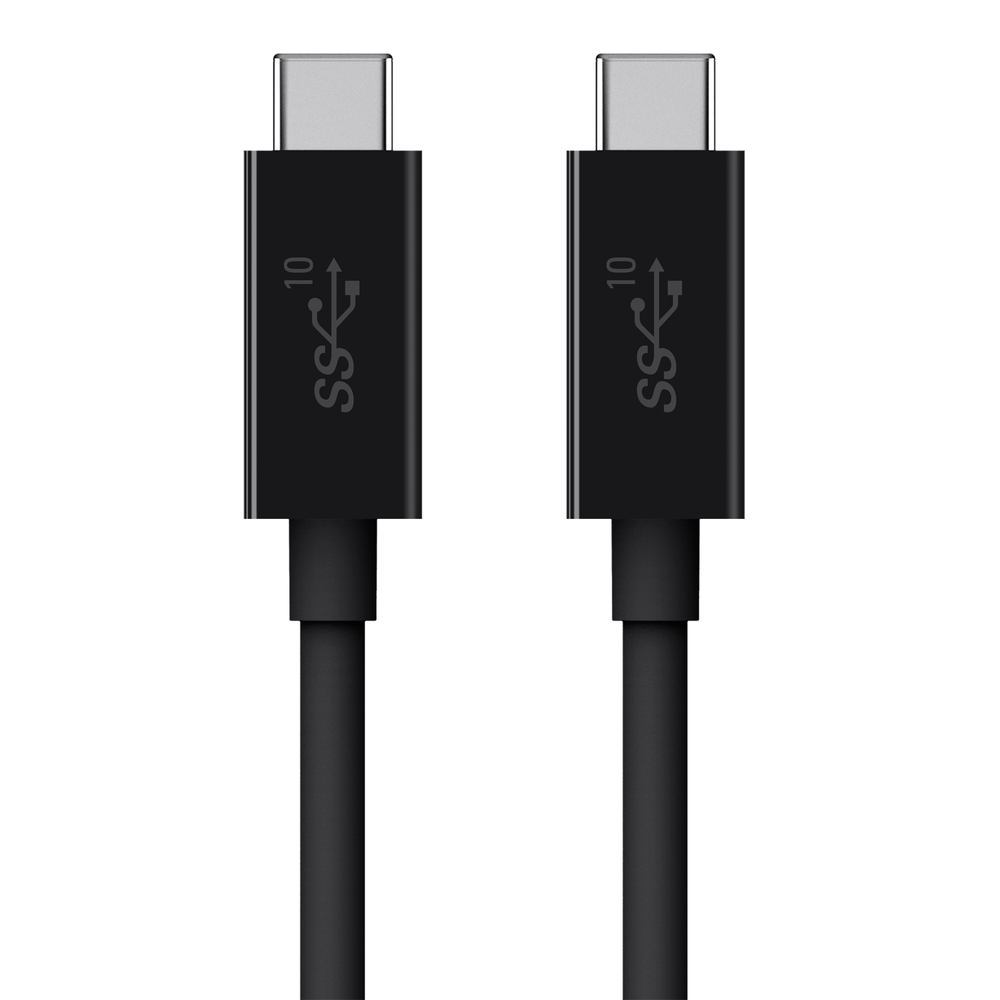
3.1 USB-C to USB-C Data Transfer Charging Cable | Belkin, Black
$(document).ready(function(){ $(\"#usb_c_pencil-banr\").load(\"/resources/static-pages/belkin-usb-c.html #us\");$(\"#usb_c_cable_finder\").load(\"/resources/static-pages/belkin-usb-c_cable_finder.html #us\"); }); THE ULTIMATE USB CONNECTIONThe Belkin 3.1 USB-C to USB-C Data Transfer Charging Cable allows you to experience up to 10 Gbps transfer speeds,…
$24.99
$29.99
Price as of October 28, 2026
Use a small evaluation worksheet
| Question | What to record |
|---|---|
| Is the input complete? | Required fields and what happens when they are missing |
| Is the result supported? | Which source supports each material claim |
| Is review practical? | Reviewer time and what evidence the reviewer sees |
| Is repetition safe? | Duplicate detection and retry behavior |
| Can the business stop it? | Pause control, access removal, and owner |
| Is value measurable? | Completed useful tasks, total cost, and correction rate |
Count the whole operating cost
Include model/API charges, integration work, hosting, monitoring, review, and maintenance. A low generation price does not imply a low cost per usable result. A system that creates ten drafts but needs extensive correction may be less useful than one that creates fewer dependable drafts.
Express the comparison with your own figures: total operating cost divided by accepted completed tasks. Keep rejected or abandoned tasks visible rather than quietly removing them from the denominator.
Define a stop condition before the pilot
Choose conditions that suspend the workflow: unexplained external actions, repeated unsupported claims, loss of source access, or an error rate above the agreed threshold. The threshold should be chosen by the accountable owner according to the task’s consequences; there is no universal percentage that makes every workflow safe.
NIST’s AI Risk Management Framework organizes risk work around governing, mapping, measuring, and managing. It is a useful reference for structuring this discussion, not a certificate that a tool or workflow is approved.
Expand only the part that earned confidence
When a pilot works, preserve the specification and test examples. Expand one boundary at a time: more inputs, a different audience, or an additional action. Changing all three at once makes it difficult to explain a later failure.
A successful pilot produces more than a demonstration. It gives the business a maintained process, an owner, a measurable result, and an informed decision about what to automate next. That is a more durable asset than a claim that the organization is now “AI-powered.”
Prepared with AI assistance. The worksheet is an editorial decision framework; no savings or customer outcomes are implied. Source checked October 23, 2026.